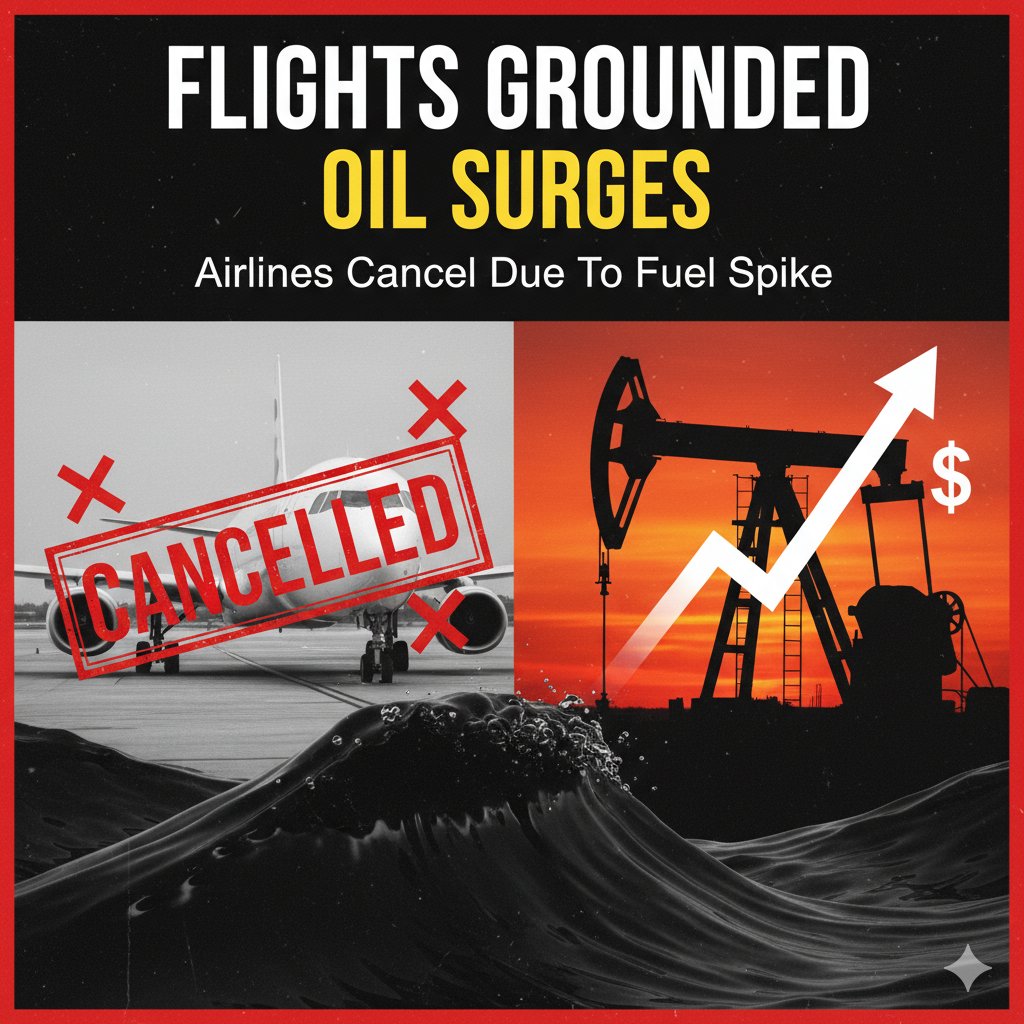
“Airlines are responding to skyrocketing jet fuel costs triggered by Middle East instability, with major carriers canceling thousands of flights, raising fares, and cutting capacity to preserve margins amid Brent crude exceeding $110 and jet fuel prices doubling rapidly.”
Airlines Begin Widespread Flight Cancellations Amid Oil Price Surge
The aviation sector is facing immediate operational adjustments as crude oil benchmarks have surged sharply. Brent crude settled recently around $112.19 per barrel, marking a significant climb from earlier levels, while West Texas Intermediate (WTI) hovered near $98.23. These increases stem directly from disruptions in key supply routes, including challenges in the Strait of Hormuz and damage to regional oil infrastructure amid ongoing conflict.
Jet fuel, which constitutes one of the largest variable costs for airlines—often 25-35% of operating expenses—has seen even steeper rises. Spot prices for jet fuel in some markets have effectively doubled within days, forcing carriers to rethink network planning. Unlike past periods where hedging mitigated impacts, many major U.S. airlines phased out extensive fuel hedging years ago, leaving them more exposed to spot market volatility.
International carriers have been quickest to act. Air New Zealand announced a 5% reduction in services, equating to approximately 1,100 flight cancellations from mid-March through early May. This move affects over 44,000 passengers, with most rebooked on alternative flights where possible. The airline cited the inability to absorb sustained high fuel costs as the primary driver, noting that prolonged elevation could necessitate further cuts.
Scandinavian Airlines (SAS) followed with its own substantial reductions, canceling at least 1,000 flights scheduled for April. The carrier’s leadership highlighted that jet fuel prices had doubled in a ten-day span, describing the situation as a “shock” to the industry. Initial cancellations focused on short-haul routes to minimize passenger disruption, but executives warned that broader capacity trims could follow if prices remain elevated.
Other global players are implementing similar measures. Thai Airways has signaled fare increases of up to 15% to offset costs, while carriers like Qantas, Cathay Pacific, and Air France-KLM have introduced fuel surcharges or broad ticket price adjustments. In Europe and Asia, airlines are prioritizing route profitability, suspending less efficient services, and rerouting to avoid higher-risk or costlier airspace.
For U.S. audiences, the effects are emerging more gradually but are no less concerning. Major domestic carriers, including Delta, American, and United, face mounting pressure from elevated fuel bills. Industry analyses suggest that sustained high jet fuel could require domestic airfares to rise by at least 10-11% to break even on costs, with some routes seeing sharper increases. Long-haul international flights, particularly those with Middle East connections or reroutings, are most vulnerable to reductions.
Broader industry implications include potential grounding of aircraft if fuel supply tightens further. Analysts have cautioned that without relief, thousands of planes could be idled globally, with weaker carriers at risk of operational halts. Demand shifts are also evident: passengers increasingly seek direct routes to bypass disrupted regions, driving up prices on those remaining options.
Key Airline Responses to Fuel Cost Surge
Air New Zealand : 1,100 flights canceled (March-May), affecting 44,000+ passengers; 5% capacity cut.
SAS (Scandinavian Airlines) : ~1,000 flights canceled in April; focus on short-haul reductions.
Thai Airways : Up to 15% fare increases announced.
Qantas, Cathay Pacific, Air France-KLM : Fuel surcharges and fare hikes implemented.
U.S. Majors (Delta, American, United) : Monitoring for capacity adjustments; potential 10%+ domestic fare pressure.
Current Oil Benchmarks (Recent Settlements)
| Benchmark | Price (USD/Barrel) | Recent Change | Notes |
|---|---|---|---|
| Brent Crude | ~112.19 | +3-4% daily | Benchmark for global jet fuel |
| WTI Crude | ~98.23 | +2%+ | U.S.-focused but influential |
| Jet Fuel (Spot) | Up to double | Rapid surge | Varies by region/market |
The situation remains fluid, with oil markets reacting hourly to developments in the region. Airlines continue to monitor inventories and hedging opportunities, but the consensus points to a period of constrained capacity and higher costs for travelers through the spring and potentially into summer travel season.
Disclaimer : This is a news report based on current market and industry developments.
