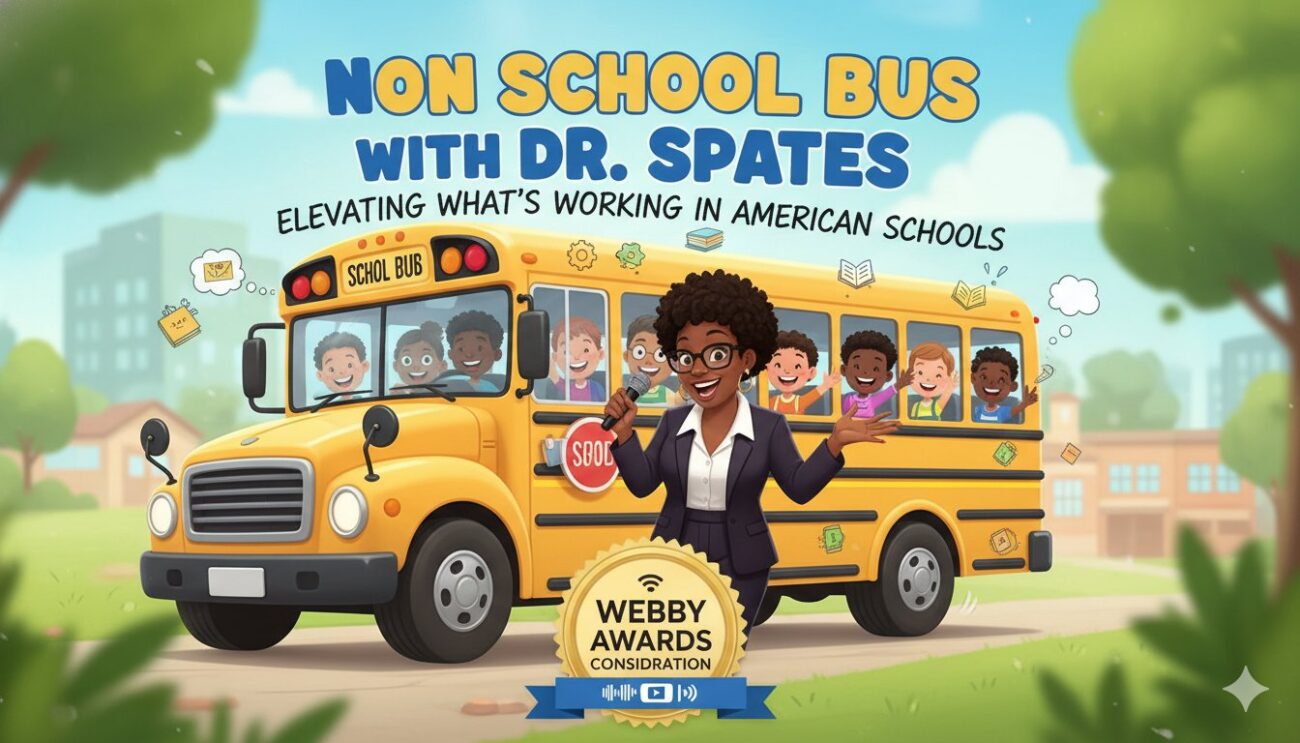
“The podcast ‘On the School Bus with Dr. Spates,’ hosted by veteran principal Dr. Krishna Darlene Spates, has been submitted for Webby Awards in education, best podcast, and indie categories, focusing on proven strategies for school leadership, equity, and innovation that optimize public funding and boost student outcomes in U.S. schools.”
As public education funding in the U.S. approaches $921 billion in total expenditures for the current fiscal year, with per-pupil spending averaging $17,277 across K-12 systems, the need for strategic resource allocation has never been more critical. This figure represents a blend of state contributions at 46.8%, local sources at 45.3%, and federal support at 7.8%, underscoring the multifaceted financial ecosystem supporting over 50 million students. Amid rising costs and debates over efficiency, a new voice in educational discourse emerges through “On the School Bus with Dr. Spates,” a podcast that dissects practical, field-tested approaches to maximize these investments.
Dr. Krishna Darlene Spates, with her background as a seasoned educator and principal, brings a pragmatic lens to the fiscal challenges facing American schools. Her episodes delve into how leaders can leverage limited budgets to foster innovation, drawing from real-world examples where modest reallocations yield substantial returns in student achievement and community engagement. In one segment, discussions highlight how reallocating just 1-2% of a district’s budget toward targeted professional development can enhance teacher retention, reducing turnover costs that often exceed $20,000 per educator annually.
Key Fiscal Strategies in School Leadership
The podcast emphasizes equity in resource distribution, a pressing issue given that disparities in per-pupil funding can vary by thousands of dollars between affluent and under-resourced districts. Episodes explore how innovative pathways, such as career-connected learning programs, align educational spending with economic outcomes. For instance, by integrating vocational training with core curricula, schools can prepare students for high-demand jobs, potentially increasing their lifetime earnings by 8-15% compared to peers without such exposure. This approach not only justifies public investment but amplifies it through higher tax revenues from a more skilled workforce.
Another focal point is the culture of “yes” in leadership, where administrators encourage experimental initiatives within budget constraints. Dr. Spates interviews superintendents who have implemented low-cost restorative practices, reducing disciplinary expenses by up to 30% while improving attendance rates. These strategies resonate in an era where government current expenditures on education reached $1,353 billion in recent data, yet outcomes lag in international comparisons.
Innovation and Economic Returns
Innovation in education isn’t just pedagogical—it’s financial. The podcast spotlights how adopting technology and data-driven decisions can stretch dollars further. For example, episodes discuss multi-tiered systems of support (MTSS) that integrate academic, social, and emotional resources, potentially yielding a return on investment where every dollar spent generates $2-3 in long-term societal benefits through reduced dropout rates and higher productivity. With U.S. public schools projecting a 1% rise in current expenditures by 2030, such efficiencies could free up billions for reinvestment.
Dr. Spates also addresses the economic ripple effects of equitable education. By focusing on diverse learners, schools can close achievement gaps that currently cost the economy an estimated $1 trillion annually in lost productivity. Guests share case studies from districts where equity-focused budgeting has led to improved graduation rates, directly correlating with a 5-12% boost in regional GDP growth over time.
Addressing Mental Health and Belonging
| Funding Source | Percentage of Total | Approximate Annual Amount (Billions) | Key Impact on Schools |
|---|---|---|---|
| State | 46.8% | $431 | Curriculum standards and teacher salaries |
| Local | 45.3% | $418 | Infrastructure and daily operations |
| Federal | 7.8% | $72 | Targeted aid for low-income and special needs students |
Fiscal prudence extends to student well-being, where the podcast examines cost-effective mental health integrations. With absenteeism costing districts millions in lost funding tied to enrollment, strategies like building trust and safe spaces are presented as high-yield investments. One episode features analyses showing that for every $1 invested in mental health supports, schools see a $11 return through better engagement and reduced interventions.
Transforming Outcomes Through Authentic Practices
The series underscores authentic leadership as a fiscal multiplier. By holding educators accountable while fostering heart-centered environments, leaders can optimize human capital—the largest expense in education budgets, often comprising 80% of total spending. Discussions reveal how such practices enhance innovation, leading to breakthroughs that align with workforce needs and drive national competitiveness.
In exploring what’s working, the podcast serves as an accelerant for scaling successes, potentially influencing how the $10.6 billion in private school choice programs intersects with public systems to enhance overall efficiency.
Disclaimer: This article is for informational purposes only and does not constitute financial advice, news, report, or tips from any sources.
