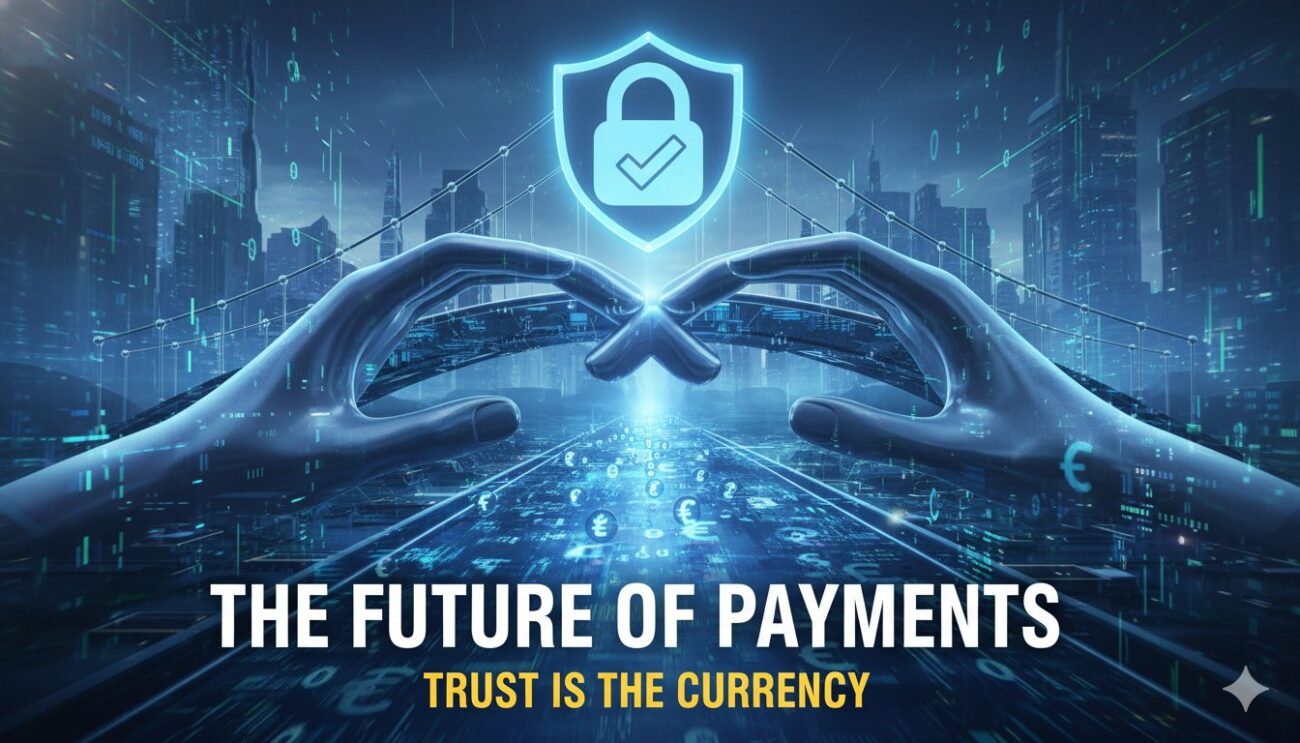
“In an age where AI agents autonomously execute payments and transactions occur at machine speed, trust is no longer optional—it’s the foundational currency that determines which platforms consumers and businesses adopt, which innovations scale, and which players survive. Without verifiable security, identity verification, and consistent reliability, even the fastest or most feature-rich systems will falter as users seek alternatives that provide genuine confidence in an increasingly complex digital economy.”
Why Trust Will Decide the Next Era of Payments
The payments industry has long chased speed, convenience, and lower costs. Real-time rails like FedNow and RTP networks have made instant transfers standard in the U.S., while account-to-account (A2A) payments continue to grow rapidly. Digital wallets are projected to reach billions of users globally, with average transaction values rising significantly in North America. Stablecoins, backed by fiat reserves and clearer regulations like the GENIUS Act framework, are transitioning from speculative assets to trusted settlement tools for cross-border and everyday use.
Yet these advancements expose a critical vulnerability: as payments become embedded, invisible, and increasingly autonomous, the human element of oversight diminishes. Agentic commerce—where AI agents compare prices, negotiate, authenticate, and execute buys on behalf of users—promises frictionless experiences. Shoppers could authorize an agent to handle routine purchases, from groceries to travel bookings, with minimal intervention. Early indicators show consumers willing to spend hundreds on single agent-enabled transactions when confidence exists.
However, this autonomy introduces unprecedented risks. Fraudsters leverage generative AI to scale scams, creating convincing deepfakes for voice and video impersonation, synthetic identities, and automated phishing. Authorized push payment (APP) fraud and business email compromise have surged, with losses in the billions annually. In the crypto space alone, illicit flows reached record levels last year, driven by AI-enhanced operations. Traditional fraud detection struggles against these adaptive threats, as criminals mimic legitimate behavior at scale.
Trust becomes the differentiator here. Consumers no longer accept “fast” or “cheap” if it comes with doubt. They seek systems where:
Transactions are predictable and reversible when needed.
Identity is verifiable without excessive friction.
Agents are authenticated and accountable.
Outcomes are consistent, even in edge cases.
Industry leaders are responding by building multi-layered trust frameworks. Network tokenization replaces vulnerable card details with secure tokens, reducing breach risks. AI-powered fraud prevention analyzes hundreds of data points per transaction in real time, cutting false positives while blocking sophisticated attacks. Digital identity solutions, including state-issued wallets and verified aliases, enable seamless yet secure verification across services.
In agentic commerce, trust orchestration platforms emerge as neutral layers validating agents from diverse sources—issuers, merchants, or third parties. Frameworks like Google’s AP2 emphasize authorization, intent capture, and accountability for AI-driven actions, shifting liability and restoring user control. These mechanisms ensure that when an agent acts, there’s cryptographic proof of legitimacy, reducing disputes and building persistent confidence.
Real-time payments amplify the stakes. Instant movement of funds is revolutionary for businesses managing cash flow and for consumers expecting immediate gratification. But speed without safeguards invites exploitation. Regulators and institutions are doubling down on shared intelligence to combat identity-based fraud, where criminals target the “who” rather than the “what” of a transaction.
Stablecoins and blockchain add another layer. With fiat backing and strict reporting, they offer transparency and stability previously absent in crypto. Merchants adopting them benefit from lower costs and global reach, but only if users trust the underlying reserves and redemption processes. De-pegging events from the past linger in memory, underscoring that technological promise alone isn’t enough—verifiable audits and interoperability with traditional systems are essential.
Consumer sentiment reflects this reality. Despite economic stability—low unemployment and rising incomes—confidence remains fragile due to past inflation and scam exposure. Surveys show high percentages of people targeted by fraud attempts yearly. In this environment, payments that feel reliable and protective become loyalty drivers. Brands that deliver “trust experiences”—transparent terms, predictable outcomes, and control during friction—win primacy.
For institutions, trust is now infrastructure, not marketing. Payment orchestration evolves into trust orchestration, dynamically routing based on risk, compliance, and reliability. Investments in AI for fraud defense, post-quantum cryptography, and collaborative networks are surging. Those who coordinate on standards—rather than compete in silos—create ecosystems where trust compounds.
The divide is clear. Platforms treating trust as an afterthought face abandonment as users migrate to alternatives. Those embedding it deeply—through resilient architecture, identity layers, security intelligence, and accountability—capture the autonomous future. In 2026 and beyond, payments success hinges not on who moves money fastest, but on who earns and maintains belief that it moves safely, predictably, and in the user’s interest.
Key Challenges and Opportunities in Building Trust
Fraud Evolution : AI scales threats; counter with AI-driven, real-time defenses and consortium data sharing.
Agent Verification : Establish ratings, cryptographic proofs, and intent validation for autonomous agents.
Identity Integration : Digital wallets and eIDAS-like standards make verification natural and fraud-resistant.
Stablecoin Maturity : Regulatory clarity boosts adoption, but transparency in reserves remains critical.
Interoperability : Seamless connections across rails prevent fragmentation and build cross-system confidence.
The next era belongs to those who recognize trust as the hardest operational imperative—and act accordingly.
Disclaimer: This article is for informational purposes only and does not constitute financial, investment, or legal advice. The payments landscape evolves rapidly; readers should conduct their own research and consult professionals for personalized guidance.
