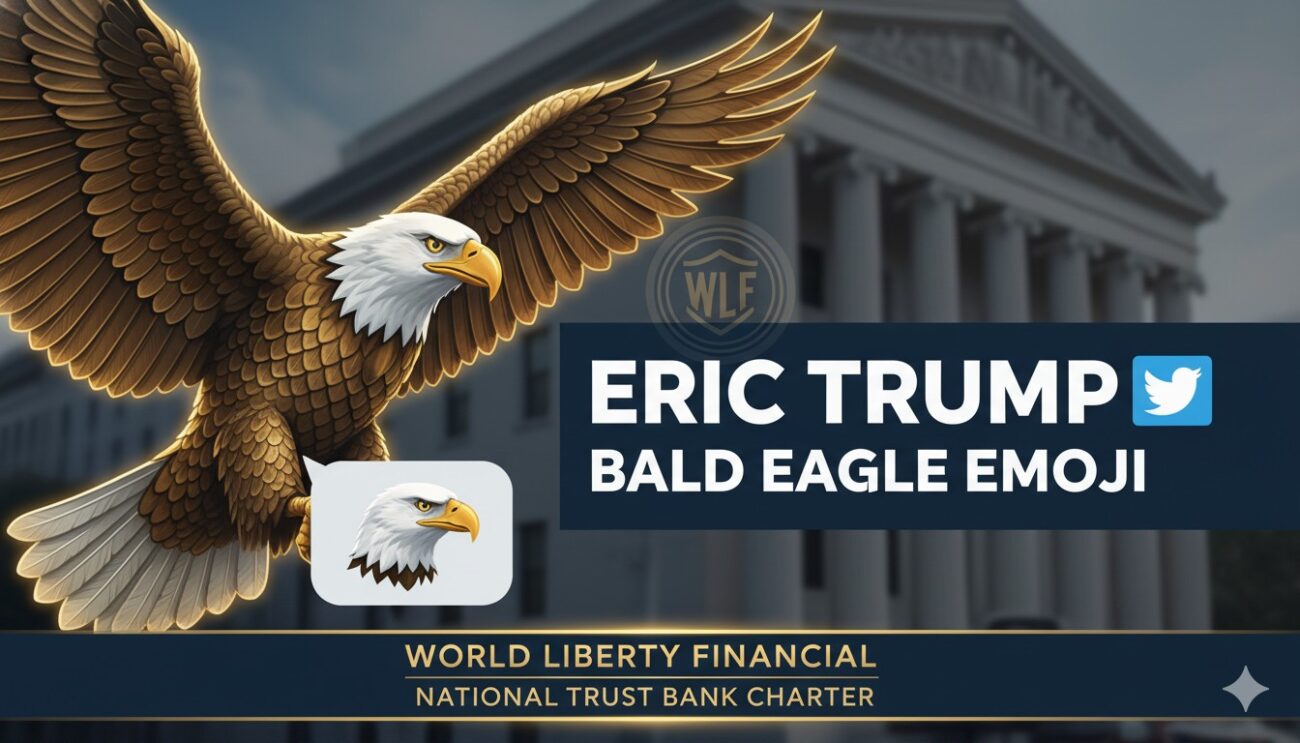
“World Liberty Financial, a Trump family-backed crypto venture, has applied for a national trust bank charter to issue and custody its USD1 stablecoin, prompting Eric Trump to post a bald eagle emoji in apparent celebration of the move toward regulated digital finance.”
World Liberty Financial, the cryptocurrency platform associated with the Trump family, has taken a significant step toward integrating digital assets with traditional banking by submitting an application for a national trust bank charter through its subsidiary, WLTC Holdings LLC. This charter would enable the company to issue and manage its dollar-pegged stablecoin, USD1, under federal oversight, marking a potential bridge between decentralized finance and established regulatory frameworks.
The application emphasizes compliance with key financial regulations, including anti-money laundering protocols and the GENIUS Act, which aims to foster innovation in stablecoin issuance. By seeking this charter from the Office of the Comptroller of the Currency, World Liberty Financial positions itself to provide custody services for digital assets, convert between stablecoins and fiat currencies, and expand access to blockchain-based financial products for everyday users and institutions alike.
Eric Trump, executive vice president of the Trump Organization and a vocal supporter of the project, responded to the announcement with a single bald eagle emoji on social media. The symbol, often associated with American freedom and strength, underscores the patriotic undertones of the initiative, which promotes itself as a tool for financial liberty and empowerment.
Key Implications for the Crypto Sector
This move comes amid a broader trend where cryptocurrency firms are pursuing bank charters to gain legitimacy and operational stability. World Liberty Financial joins a growing list of entities blending crypto with banking, potentially reducing reliance on third-party custodians and enhancing user trust through federal supervision.
Stablecoin Expansion : USD1, designed as a reliable dollar-backed token, could see increased adoption if the charter is approved, offering seamless integration with payment systems and DeFi protocols.
Regulatory Alignment : The application highlights efforts to operate within U.S. laws, addressing concerns over illicit activities in crypto while opening doors for institutional involvement.
Market Impact : Similar ventures have seen token values fluctuate based on regulatory progress; World Liberty Financial’s governance token currently trades at around $0.012, reflecting optimism in the sector’s maturation.
Potential Challenges and Opportunities
Securing a national trust bank charter is no small feat, requiring rigorous scrutiny of capital reserves, risk management, and operational plans. Critics in traditional banking circles express concerns over crypto’s volatility potentially infiltrating regulated spaces, while proponents argue it democratizes finance for underserved populations.
If successful, this could pave the way for more hybrid models, where stablecoins like USD1 serve as alternatives to conventional banking products. For instance, users might benefit from faster cross-border transactions, lower fees, and yield-generating opportunities tied to real-world assets.
Comparative Landscape
To contextualize, here’s a overview of select crypto firms pursuing or holding U.S. bank charters:
| Company | Charter Type | Focus Area | Status |
|---|---|---|---|
| World Liberty Financial | National Trust Bank | Stablecoin Issuance/Custody | Applied |
| Circle | National Bank | USDC Stablecoin | Approved |
| Paxos | Limited Purpose Trust | Stablecoin Management | Approved |
| Anchorage Digital | National Trust Bank | Crypto Custody | Approved |
This table illustrates the competitive environment, where approval rates depend on demonstrating robust compliance and financial soundness.
Overall, the push reflects a strategic pivot toward “regulated rails” in crypto, potentially attracting more mainstream capital and users while navigating the complexities of federal oversight.
Disclaimer: This news report is based on publicly available information and is intended for informational purposes only. It does not constitute investment advice, financial advice, trading advice, or any other kind of advice. Readers should conduct their own research and consult with qualified professionals before making any decisions.
