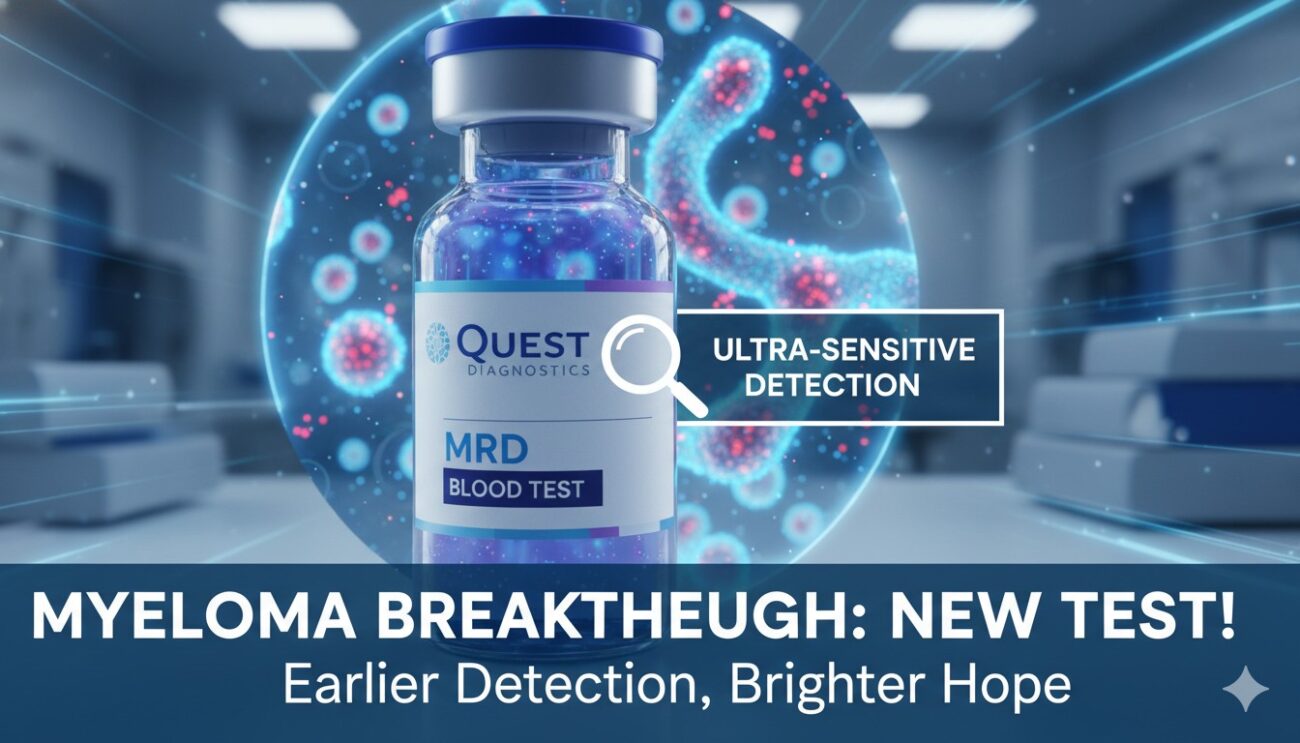
Quest Diagnostics has introduced a cutting-edge flow cytometry-based MRD blood test for myeloma, offering ultrasensitive detection comparable to next-generation sequencing at reduced costs, with nationwide availability and enhanced specimen stability to improve patient monitoring and treatment outcomes in the oncology sector.
Quest Diagnostics Enhances Oncology Diagnostics with New MRD Test
Quest Diagnostics, a major player in the diagnostic services industry listed on the NYSE under DGX, has rolled out an innovative blood test aimed at transforming how measurable residual disease is tracked in patients battling multiple myeloma. This development positions the company at the forefront of precision medicine, potentially expanding its market share in the growing oncology testing segment, which is projected to reach billions in annual revenue as demand for advanced cancer diagnostics surges amid an aging U.S. population.
The test, dubbed Quest Flow Cytometry MRD for Myeloma, leverages sophisticated flow cytometry technology to identify lingering cancer cells in the bloodstream with a detection threshold as low as one myeloma cell per million normal cells. This level of precision rivals more expensive next-generation sequencing approaches, but it achieves this through a simple blood draw, eliminating the need for invasive bone marrow procedures that have long been the standard. For healthcare providers, this means easier integration into routine patient care, particularly for those in remote or underserved areas where access to specialized labs is limited.
From a financial perspective, this launch could bolster Quest’s revenue streams in its oncology division, which already contributes significantly to the company’s overall performance. With multiple myeloma affecting approximately 35,000 new patients annually in the United States, the addressable market for MRD testing is substantial. Analysts anticipate that innovations like this could drive mid-single-digit growth in Quest’s advanced diagnostics portfolio, helping offset pressures from reimbursement changes and competition in core lab services. The test’s cost-effectiveness—estimated to be a fraction of sequencing-based alternatives—may encourage broader adoption by insurers and health systems focused on value-based care models.
Market Implications and Competitive Edge
In the competitive landscape of diagnostic testing, Quest’s new offering stands out due to its five-day specimen stability window, a marked improvement over the three-day or shorter limits of traditional flow cytometry tests. This extended viability facilitates shipping from across the country to Quest’s specialized oncology laboratory in California, enabling true nationwide access. Such logistical advantages could translate into higher testing volumes, directly impacting the company’s top-line growth.
Competitors in the space, including other lab giants and specialized biotech firms, have been pushing sequencing-based MRD tests, but Quest’s flow cytometry approach offers a compelling alternative for budget-conscious providers. By reducing the financial barrier to ultrasensitive MRD detection, Quest may capture a larger slice of the oncology market, where MRD status increasingly informs treatment decisions, such as the continuation of therapy or enrollment in clinical trials. This aligns with broader industry trends toward personalized medicine, where early detection of residual disease can lead to better survival rates and reduced healthcare costs over time.
Financially, Quest’s stock, currently trading around $183 per share with a market capitalization exceeding $20 billion, has shown resilience despite recent fluctuations. The company’s focus on expanding its oncology capabilities through internal innovation and strategic acquisitions has supported a steady dividend yield and share buyback programs, appealing to income-focused investors. This latest product launch could serve as a catalyst for renewed investor interest, especially as the firm prepares for its upcoming earnings report, where oncology growth is expected to be a key discussion point.
Technical Details and Clinical Relevance
Delving deeper into the test’s mechanics, it employs multiparameter flow cytometry to analyze blood samples for specific markers indicative of myeloma cells. Unlike bone marrow-based assessments, which require painful aspirations and carry risks of complications, this blood-based method minimizes patient discomfort while maintaining high sensitivity. Clinical studies have demonstrated that achieving MRD negativity—meaning no detectable residual disease—is associated with superior progression-free survival in myeloma patients, making tools like this invaluable for oncologists.
The test’s validation process involved rigorous comparisons to established standards, confirming its ability to detect minimal disease burdens that could signal relapse risks. For patients undergoing stem cell transplants or novel immunotherapies, regular MRD monitoring via this test could optimize treatment protocols, potentially extending remission periods and improving quality of life. In economic terms, by shifting away from more resource-intensive sequencing, healthcare systems could save millions annually, with Quest poised to benefit from increased test orders.
Potential Revenue Impact and Growth Projections
Breaking down the financial upside, Quest’s oncology segment has been a growth driver, with recent quarters showing double-digit increases in advanced testing revenues. The MRD test for myeloma could add incremental revenue, particularly as it complements existing offerings like companion diagnostics for targeted therapies. Assuming conservative adoption rates, this could contribute several percentage points to annual growth in the diagnostics business, which accounts for the bulk of Quest’s $9 billion-plus in yearly sales.
To illustrate potential market penetration, consider the following table outlining estimated U.S. myeloma patient cohorts and testing opportunities:
| Patient Segment | Estimated Annual Cases | Potential MRD Testing Frequency | Projected Revenue Opportunity per Test Cycle |
|---|---|---|---|
| Newly Diagnosed | 35,000 | Initial and follow-up (2-4 times/year) | $500-$1,000 per test |
| In Remission/Post-Treatment | 100,000+ | Monitoring (1-2 times/year) | $300-$700 per test |
| Clinical Trial Participants | 5,000-10,000 | Per protocol (variable) | $800-$1,500 per test |
These figures underscore the scalable nature of the test, with Quest’s extensive network of patient service centers providing a distribution advantage. As reimbursement policies evolve to favor evidence-based MRD testing, Quest’s early mover status in flow cytometry could lock in long-term contracts with major hospital systems and oncology practices.
Broader Industry Trends and Strategic Positioning
The rise of liquid biopsies and blood-based diagnostics represents a paradigm shift in cancer care, moving away from tissue-dependent methods toward less invasive options. Quest’s investment in this area, including prior acquisitions in molecular diagnostics, positions it well to capitalize on this trend. For investors, this launch highlights the company’s commitment to innovation amid a healthcare environment emphasizing cost containment and outcomes improvement.
Key points for stakeholders include:
Accessibility Boost : Nationwide availability reduces geographic barriers, potentially increasing test utilization by 20-30% in non-urban areas.
Cost Savings : Lower pricing compared to NGS could lead to preferred status in payer networks, driving volume growth.
Clinical Integration : Seamless fit into existing workflows for hematologists, enhancing Quest’s reputation as a comprehensive diagnostics provider.
Risk Mitigation : By focusing on blood samples, the test addresses patient compliance issues associated with invasive procedures, indirectly supporting higher retention in long-term monitoring programs.
As the oncology diagnostics market continues to expand, driven by advancements in immunotherapy and targeted drugs, Quest’s MRD test could become a cornerstone offering, reinforcing its competitive moat and supporting sustained earnings growth.
Disclaimer: This news report is provided for informational purposes only and does not constitute investment advice, financial tips, or endorsements of any sources.
