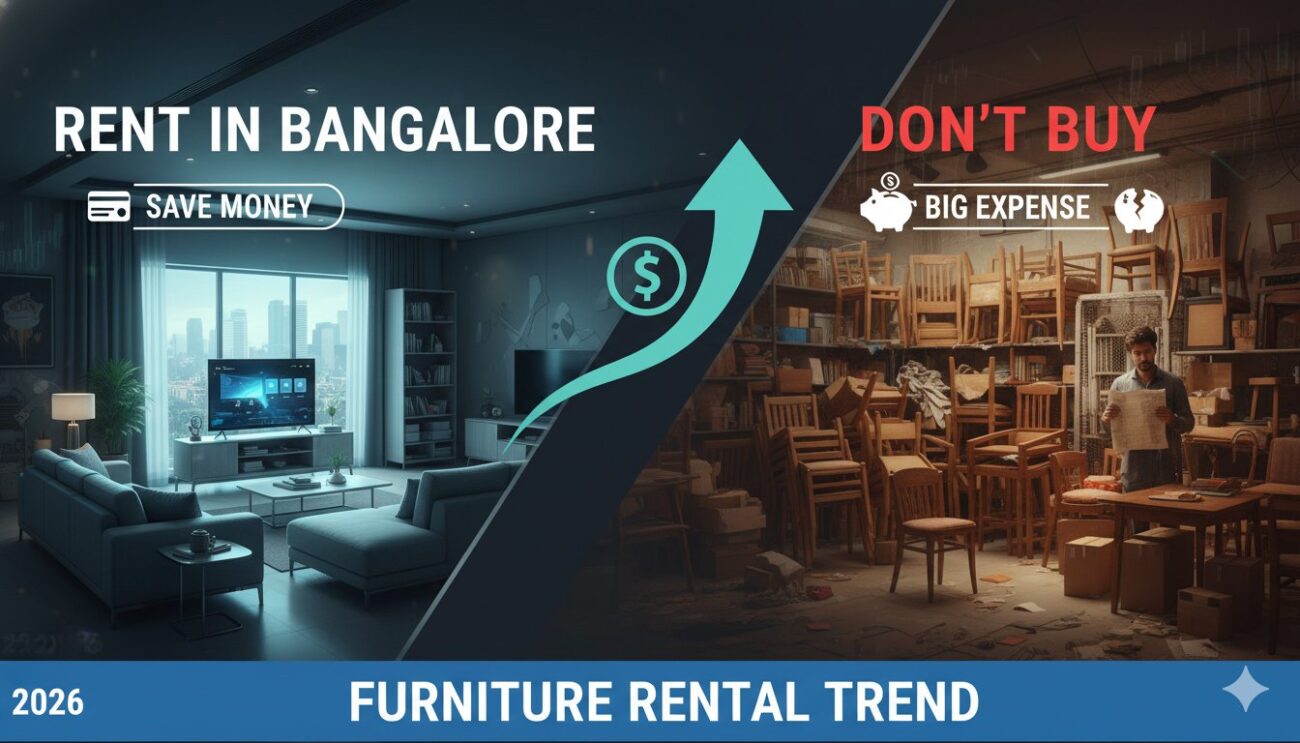
In Bangalore’s fast-paced 2026 landscape, renting furniture instead of buying delivers clear financial advantages: lower initial outlays, included maintenance, easy upgrades or relocations, and avoidance of depreciation losses—making it the preferred option for young professionals and migrants who view homes as temporary bases rather than permanent investments.
Rent Furniture in Bangalore Instead of Buying in 2026: The Financial Logic Behind the City’s Growing Furniture Rental Trend
Bangalore’s status as India’s premier tech hub continues to draw hundreds of thousands of new residents each year, with migration fueled by booming IT employment, global capability centers, and startup ecosystems. This influx—adding 3-4 lakh people annually—creates relentless pressure on housing and furnishing decisions. Many newcomers opt for rented apartments in high-demand corridors like Whitefield, Sarjapur Road, Electronic City, Outer Ring Road, and emerging North Bangalore areas, where average blended monthly rents hover around ₹28,000 for typical setups.
In this environment, buying furniture outright represents a significant financial drag. A full home setup— including beds, sofas, dining tables, wardrobes, and appliances—can easily exceed ₹5-10 lakh for basic to mid-range quality items. Add in transportation, assembly, potential storage during relocations, and eventual resale losses due to wear and tear, and the total cost of ownership climbs higher. Furniture depreciates rapidly, often losing 50-70% of value within a few years, especially for modular or particle-board pieces common in urban markets.
Renting flips this equation. Leading platforms dominate the scene, offering subscription-style models with monthly payments starting as low as a few hundred rupees per item, scaling to comprehensive home packages. For instance, a typical 1-2 BHK package might run ₹3,000-8,000 per month, depending on duration, quality, and inclusions like free delivery, assembly, repairs, and upgrades. Shorter commitments (6-12 months) suit job-hoppers, while longer plans reduce effective rates further.
The core financial logic rests on several pillars:
Capital Preservation : Avoid locking up ₹3-8 lakh in depreciating assets. That money stays invested in high-return opportunities like mutual funds, stocks, or emergency funds—critical in a volatile job market.
Predictable Cash Flow : Fixed monthly rentals fit neatly into budgeting, especially when salaries include variable bonuses or relocation allowances. No surprise repair bills, as most services cover maintenance.
Flexibility Premium : Bangalore’s workforce relocates frequently—within the city or to other metros. Renting eliminates disposal hassles, transport fees (often ₹10,000-30,000 per move), and storage costs. Upgrade to better pieces as income grows without resale losses.
Sustainability Angle : Rental models promote circular economy practices, reducing waste from frequent replacements. Many providers refurbish and reuse items, appealing to environmentally conscious millennials.
Real-world comparisons highlight the edge. For a standard setup (sofa set, bed with mattress, dining table, wardrobe), buying might cost ₹2.5-4 lakh upfront. Renting the equivalent could total ₹40,000-80,000 annually (₹3,500-7,000 monthly), but over 2-3 years—the average stay for many migrants—the cumulative rental often stays below purchase price plus opportunity costs. Beyond 4-5 years of stable residency, buying edges ahead, but that’s rare in Bangalore’s dynamic scene.
The market’s explosive growth underscores this shift. India’s furniture rental sector has expanded rapidly, with urban demand in cities like Bangalore leading the charge through double-digit annual increases in recent years. Projections point to continued momentum, with the broader Indian market on track toward multi-billion dollar valuations by the end of the decade, propelled by urbanization, gig work, and e-commerce integration.
Key drivers in Bangalore include:
High Transient Population : IT professionals, fresh graduates, and expats prioritize short-term convenience.
Rising Housing Costs : With residential rentals surging 8-10% annually in key pockets, minimizing additional expenses like furnishing becomes essential.
Platform Maturity : Services now offer premium, modular, and customizable options, including smart furniture, with quick 72-hour deliveries and zero-deposit trials in some cases.
Economic Pressures : Inflation, variable incomes, and focus on experiences over possessions favor renting.
Potential drawbacks exist—long-term renting (beyond 5+ years) can exceed buying costs cumulatively, and quality varies across providers. Some users report delays in repairs or style limitations. Yet for most in 2026 Bangalore, these pale against the benefits of liquidity and mobility.
Cost Comparison Table: Rent vs Buy for Common Items (Approximate 2026 Bangalore Figures)
| Item | Buy Cost (Mid-Range) | Rent Monthly (12-Month Plan) | Break-Even Period (Months) | Notes |
|---|---|---|---|---|
| Queen Bed + Mattress | ₹40,000-70,000 | ₹800-1,500 | 40-60 | Rent includes maintenance |
| 5-Seater Sofa Set | ₹50,000-90,000 | ₹1,000-2,000 | 40-50 | Upgrades easy with rent |
| Dining Table (4-Seater) | ₹25,000-50,000 | ₹500-1,000 | 40-60 | No assembly hassles |
| Wardrobe (Full Setup) | ₹30,000-60,000 | ₹600-1,200 | 45-55 | Modular options popular |
| Full 1BHK Package | ₹2-4 Lakh | ₹3,000-6,000 | 40-70 | Often includes appliances |
This table illustrates why renting dominates short-to-medium stays: lower entry barriers and preserved capital outweigh long-term ownership for most.
In essence, Bangalore’s furniture rental boom reflects deeper lifestyle changes—prioritizing agility, financial efficiency, and minimalism in a city where careers evolve faster than leases.
