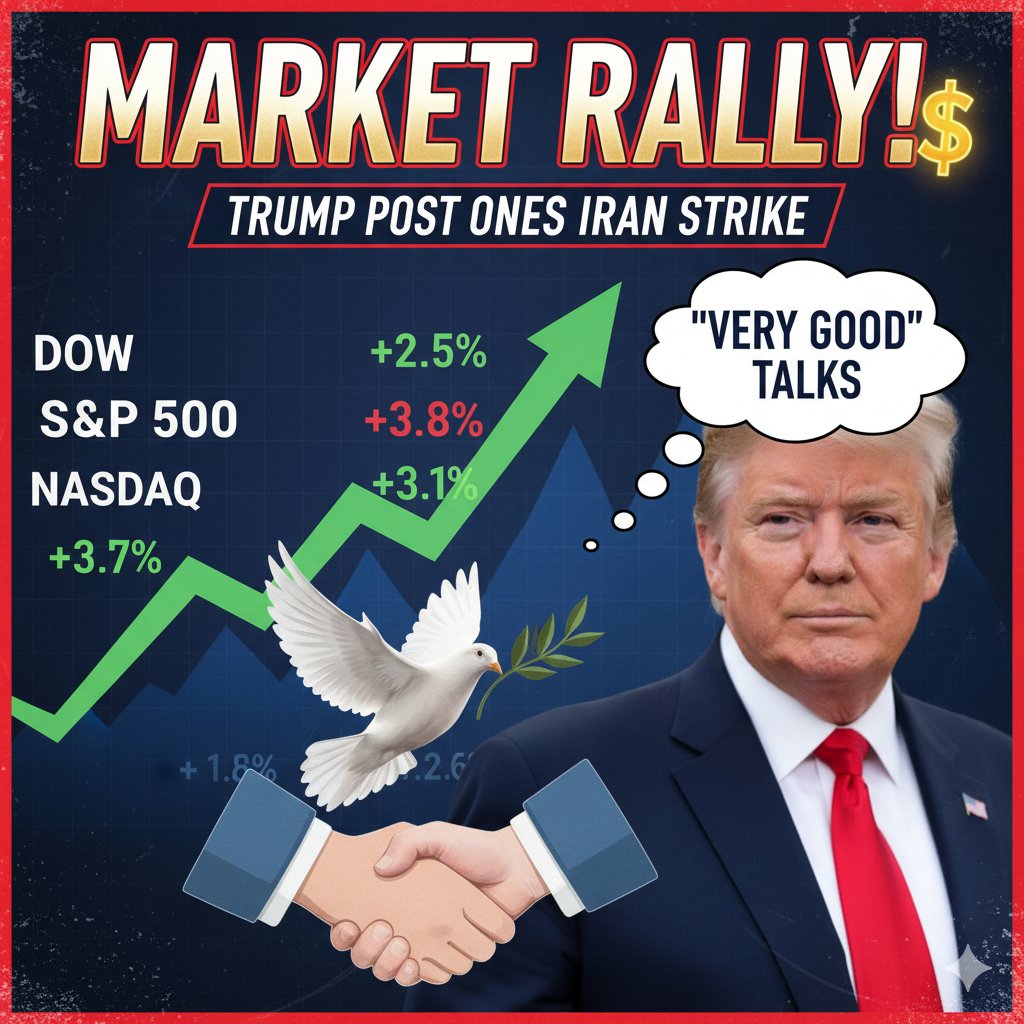
U.S. major stock indexes rallied sharply on Monday, with the Dow Jones Industrial Average surging over 600 points, the S&P 500 climbing more than 1%, and the Nasdaq Composite gaining around 1.2-1.8%, as President Donald Trump announced a postponement of planned military strikes on Iranian energy infrastructure following productive discussions with Tehran. This development eased geopolitical tensions that had driven oil prices higher and pressured equities in recent sessions, leading to broad-based gains across sectors sensitive to energy costs and risk sentiment. Oil prices retreated significantly on the news, further supporting the market rebound.
Major Indexes Rally on De-escalation Hopes
U.S. equities staged a strong recovery Monday after facing headwinds from escalating Middle East tensions. President Trump’s announcement via Truth Social that he had instructed the military to postpone strikes on Iran’s power plants and energy facilities for a five-day period, based on “very good and productive” talks with Iranian representatives, shifted investor sentiment dramatically. The decision came after an ultimatum issued over the weekend tying U.S. military action to the reopening of the Strait of Hormuz and amid ongoing regional hostilities.
The Dow Jones Industrial Average climbed approximately 611 points, or 1.34%, reaching around 46,189 during midday trading. This marked a reversal from earlier futures indicating potential weakness amid fears of broader conflict disrupting global energy supplies.
The S&P 500 advanced about 1.08-1.5%, trading near 6,605-6,648 levels in intraday moves, benefiting from reduced risk premiums and a pullback in energy sector pressures.
The Nasdaq Composite, heavy with technology and growth names, rose around 1.18-1.8%, reflecting improved outlook for consumer and corporate spending if oil-driven inflation fears subside.
Oil Prices Plunge on Reduced Supply Disruption Fears
Crude oil benchmarks fell sharply following the announcement. West Texas Intermediate (WTI) crude dropped as much as 7-13% in volatile trading, easing from recent highs driven by concerns over the Strait of Hormuz closure and potential attacks on energy infrastructure. Brent crude also retreated significantly, providing relief to energy-sensitive sectors and broader equities.
The decline in oil helped fuel gains in airlines, transportation, and consumer discretionary stocks, which had been weighed down by higher fuel costs. Banks and financials also participated in the rally, as lower geopolitical risk supported expectations for stable economic conditions.
Sector Performance Highlights
Energy sector pared earlier losses but remained volatile amid fluctuating oil prices.
Technology and growth stocks outperformed, with the Nasdaq leading gains.
Cyclical sectors like industrials and materials benefited from de-escalation signals.
Defensive sectors such as utilities and consumer staples saw more muted moves.
Broader Market Context
Recent weeks had seen equities under pressure from the intensifying Middle East conflict, with oil surging and raising recession fears through potential supply shocks and inflation. The Nasdaq had approached correction territory in prior sessions, while the broader market faced multi-day declines. Monday’s rally halted that slide, with futures initially spiking over 1,000 points on the Dow before settling into solid gains.
Investors now eye the continuation of talks this week, with the five-day postponement providing a window for diplomatic progress. Any breakdown could reverse sentiment, but the immediate reaction underscored markets’ sensitivity to geopolitical headlines.
Key Market Levels (Intraday Approximate)
Dow Jones Industrial Average: +611 points (+1.34%) to ~46,189
S&P 500: +1.08-1.5% to ~6,605-6,648
Nasdaq Composite: +1.18-1.8% to ~22,000-22,033 range
Crude Oil (WTI): -7-13% intraday drop
The move highlights how quickly risk assets can rebound when major uncertainties ease, even temporarily.
Disclaimer: This is for informational purposes only and does not constitute investment advice, financial recommendations, or endorsements of any security or strategy.
