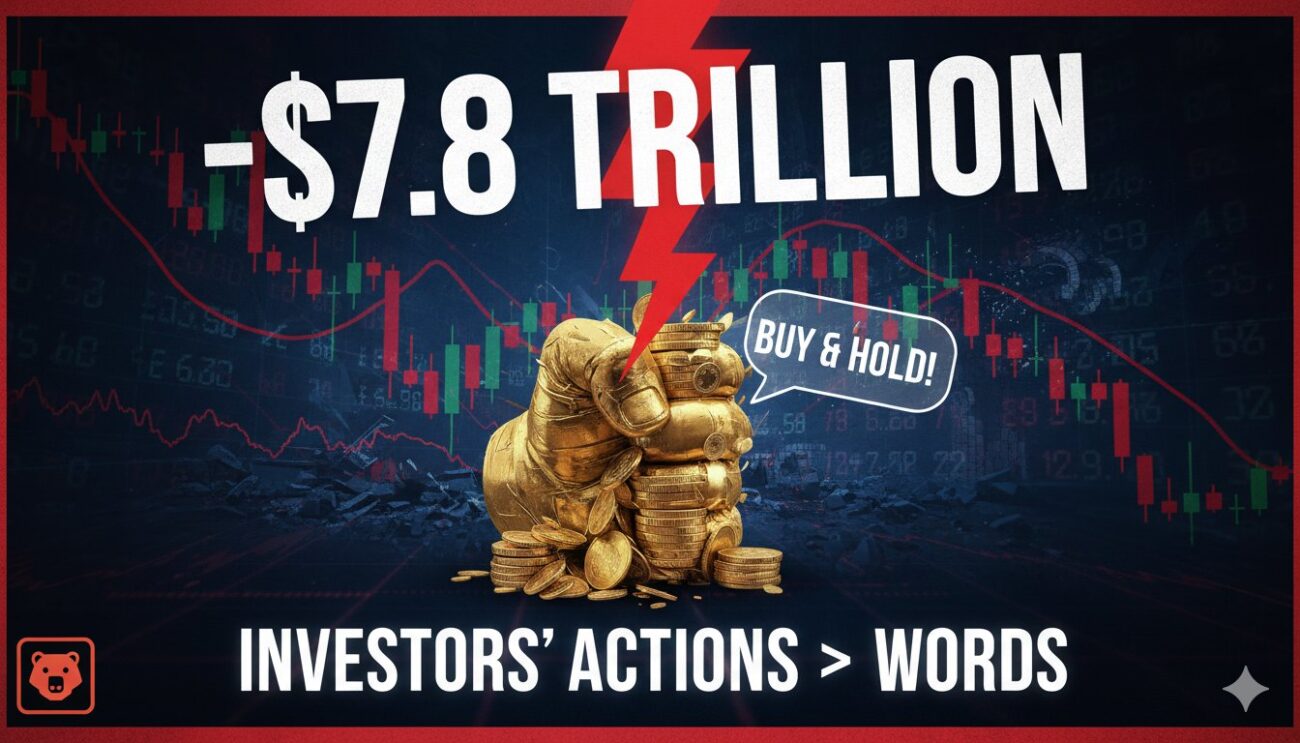
Despite vocal optimism from surveys and analysts, investors have funneled a record $7.7 trillion into money market funds as of late January 2026, signaling deep-seated caution amid historically elevated stock valuations, with the S&P 500 trading at a forward P/E of 21.8 and Shiller CAPE exceeding 30, reminiscent of past market peaks that preceded sharp declines. This disconnect highlights potential risks from overvalued equities, policy shifts, and economic uncertainties, urging a reevaluation of portfolio strategies in a bull market that’s stretched thin.
Market Valuations Reach Precarious Heights
The S&P 500 has climbed to new records, closing at 6,932.96 on January 23, 2026, reflecting a year-to-date gain of over 2% following a robust 18% return in 2025. Yet, this ascent comes against a backdrop of valuations that echo the frothiest periods in market history. The Shiller Cyclically Adjusted Price-to-Earnings (CAPE) ratio, which smooths earnings over a decade to account for economic cycles, now stands above 30—a threshold crossed only a handful of times since 1871, including during the dot-com bubble of the early 2000s.
This metric suggests that stocks are priced for perfection, with little margin for error if earnings growth falters or external shocks materialize. Forward-looking measures paint a similar picture: the S&P 500’s forward P/E ratio hovers at 21.8, based on estimated earnings for the next 12 months totaling around $317 per share. Compared to the long-term average of about 17, this implies investors are paying a premium for growth that’s increasingly tied to a narrow set of sectors, particularly technology and artificial intelligence.
Broader indices show comparable strains. The Nasdaq Composite, heavily weighted toward tech giants, trades at a forward P/E of 28.5, while the Dow Jones Industrial Average, at 25,400 as of the same date, carries a P/E of 22.3. These figures underscore a market where enthusiasm for innovation has outpaced fundamentals, potentially setting the stage for volatility if sentiment shifts.
The Massive Cash Hoard in Money Market Funds
Amid these lofty valuations, investors’ behavior tells a starkly different story from their professed confidence. Total assets in money market funds dipped slightly to $7.70 trillion for the week ended January 21, 2026, according to the latest data from the Investment Company Institute, marking a $30.85 billion decline but still near all-time highs. This figure, which ballooned during the Federal Reserve’s rate-hiking cycle from 2022 to 2023, has remained elevated even as the Fed initiated rate cuts in September 2024, bringing the federal funds rate down to a target range of 4.25%-4.50%.
Why the persistence? Money market funds, offering yields around 4.5% on government-backed securities like Treasury bills and certificates of deposit, provide a low-risk haven in uncertain times. Inflows accelerated in late 2025, with retail investors adding over $500 billion in the fourth quarter alone, despite declining yields post-rate cuts. Institutional funds, holding about 60% of the total, have seen steady contributions from corporations parking cash amid geopolitical tensions and tariff threats.
This $7.7 trillion pile—equivalent to roughly 25% of the U.S. GDP—represents sidelined capital that could fuel a rally if redeployed into equities. However, its growth signals widespread unease, as investors opt for safety over the potential upside in stocks. Historical parallels abound: similar cash buildups preceded the 2008 financial crisis and the 2020 pandemic crash, where fear trumped greed until forced liquidation occurred.
Investor Sentiment Surveys Versus Actual Behavior
| Money Market Fund Assets Trend (Billions USD) |
|---|
| Period |
| Week of Jan 21, 2026 |
| End of Q4 2025 |
| End of Q3 2025 |
| End of 2024 |
Polls and surveys consistently capture a bullish tone among market participants. The American Association of Individual Investors (AAII) Sentiment Survey for the week ending January 22, 2026, showed optimism retracting slightly but still above neutral, with 42% of respondents expecting stock gains over the next six months—down from 48% the prior week but well above the historical average of 37.5%. Professional forecasts align, with Goldman Sachs projecting a 12% total return for the S&P 500 in 2026, citing resilient corporate earnings and supportive fiscal policies.
Consumer confidence echoes this positivity. The University of Michigan’s consumer sentiment index rose to 82.5 in preliminary January 2026 readings, up from 78.9 in December 2025, bolstered by easing inflation expectations, which slipped to 4.0% for the year ahead—the lowest since early 2025. Wall Street strategists, in aggregate, anticipate S&P 500 earnings growth of 14% for 2026, driven by sectors like semiconductors and software.
Yet, these verbal affirmations clash with on-the-ground actions. The National Association of Active Investment Managers (NAAIM) Exposure Index, measuring active managers’ equity allocations, stood at 85% as of mid-January 2026—elevated but down from peaks above 100% in late 2025, indicating a subtle pullback. More telling is the retail investor exodus from equity funds: net outflows from U.S. stock mutual funds and ETFs reached $150 billion in 2025, per EPFR Global data, redirecting toward fixed-income alternatives.
This divergence isn’t new. During the 2018-2019 trade wars, surveys remained upbeat while cash reserves swelled, foreshadowing a 20% market drop. Today, with proposed tariffs on imports potentially adding 2-3% to inflation and squeezing margins, the gap between words and deeds widens, suggesting surveys capture hope rather than conviction.
Historical Precedents and Market Cycles
Examining past cycles reveals patterns that amplify the current warning. When the Shiller CAPE exceeded 30 in the past—such as in 1929, 1999, and briefly in 2021—major indices suffered declines of 20% to 89%. The average bear market since 1929 lasts 286 days, with recoveries taking twice as long, but bull phases average 1,011 days, underscoring equities’ long-term resilience.
Tariff policies offer another lens. The 2018 tariffs under similar administrations led to a 1.5% drag on GDP growth, per Federal Reserve studies, with affected companies reporting 5-10% profit hits. If escalated in 2026, encompassing broader partners like Mexico and Canada, the impact could ripple through supply chains, elevating costs for consumer goods and tech components.
Innovation-driven rallies, like the ongoing AI boom, have historically bubbled and burst. The dot-com era saw the Nasdaq surge 400% before crashing 78%, while the railroad mania of the 1800s followed a similar trajectory. Current AI valuations, with firms like Nvidia trading at 50 times forward earnings, mirror these excesses, where early adopters reap gains but broader adoption lags.
Bear markets resolve swiftly: only eight of 27 since 1929 lasted over a year. Conversely, every 20-year rolling period in S&P 500 history (1900-2025) delivered positive annualized returns, ranging from 3% to 17%, including dividends. This duality—short-term peril, long-term promise—frames the $7.7 trillion cash signal as a temporary refuge rather than a permanent shift.
Emerging Risks in Policy and Economy
Policy uncertainties compound the caution. Proposed extensions of the 2017 Tax Cuts and Jobs Act could boost buybacks, which hit $1.2 trillion in 2025, supporting stock prices. However, if fiscal deficits widen to 7% of GDP, bond yields—currently at 4.2% for the 10-year Treasury—might spike, pressuring equities.
Geopolitical factors loom large. Escalating tensions in the Middle East and Europe could disrupt energy supplies, pushing oil prices above $80 per barrel and stoking inflation. Domestically, labor market softening, with unemployment at 4.3% in December 2025, hints at recession risks if jobless claims rise further.
Sector-specific vulnerabilities persist. Technology, comprising 32% of the S&P 500, faces antitrust scrutiny and slowing growth, with Magnificent Seven earnings expected to decelerate to 20% in 2026 from 40% in 2025. Financials, sensitive to rates, trade at 15 times earnings but could suffer if credit defaults climb amid higher borrowing costs.
Strategic Considerations for Portfolios
Diversification emerges as a key tactic. Allocating to value stocks, with P/E ratios below 15 in sectors like energy and utilities, offers a buffer against growth stock corrections. International exposure, particularly in emerging markets trading at 12 times earnings, provides geographic spread.
Fixed-income alternatives, beyond money markets, include corporate bonds yielding 5.5%, offering income with moderate risk. For equity bulls, dollar-cost averaging into broad indices mitigates timing risks, capitalizing on historical recoveries.
Volatility hedging via options or inverse ETFs can protect downside, though at a cost. Monitoring fund flows weekly helps gauge shifts: sustained MMF outflows could signal a rotation back to stocks, potentially igniting the next leg up.
Sector Performance and Outlook
| Key Market Metrics as of January 23, 2026 |
|---|
| Index/Metric |
| S&P 500 |
| Nasdaq Composite |
| Dow Jones |
| Shiller CAPE Ratio |
Technology leads with a 4% YTD gain, but overconcentration risks a pullback if AI hype cools. Healthcare, up 1.5%, benefits from aging demographics and biotech advances, trading at 18 times earnings. Energy, flat YTD, could rebound if OPEC+ cuts tighten supply, with multiples at 11.
Consumer discretionary faces headwinds from tariff-induced price hikes, potentially curbing spending. Real estate, sensitive to rates, has declined 0.5% amid commercial property vacancies at 18%.
Balancing growth and defensive sectors—utilities and staples, yielding 3.5% dividends—strengthens resilience. Monitoring earnings season, starting with tech giants in late January, will clarify if projections hold amid cost pressures.
Disclaimer: This article is for informational purposes only and does not constitute financial advice, investment recommendations, or an endorsement of any strategy. Market conditions can change rapidly, and past performance is not indicative of future results. Readers should conduct their own research or consult with qualified financial professionals before making any decisions. All data and opinions are based on publicly available information and are subject to errors or omissions.
